Checkers and draughts rule sets
Five games that share a board and a name. What separates them is not decoration: which squares are in play, whether a man may capture backwards, whether a king slides or steps, and whether you are forced to take the longest line on offer.
The differences in one table
| Rule set | Board | Men | Men capture | King | Maximum capture |
|---|---|---|---|---|---|
| English checkers | 8×8 diagonal | 12 | forward only | one square | no |
| Brazilian draughts | 8×8 diagonal | 12 | all directions | flying | yes |
| International draughts | 10×10 diagonal | 20 | all directions | flying | yes |
| Spanish checkers | 8×8 diagonal | 12 | forward only | flying | yes, then most kings |
| Turkish draughts | 8×8, all squares | 16 | forward and sideways | flying, orthogonal | yes |
Capturing is compulsory in all five: while a jump exists, an ordinary move is illegal. What differs is whether you may choose which jump - only English checkers leaves that free.
-
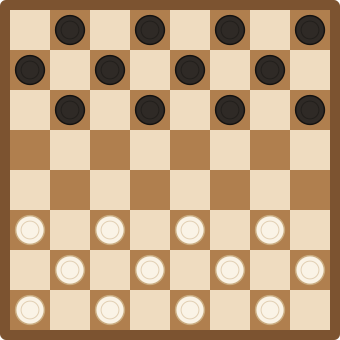
English checkers
The 8×8 game most of the English-speaking world learned as a child. Forward-only men, kings that step one square, and no obligation to take the longest line.
-
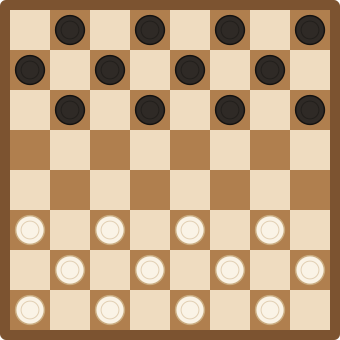
Brazilian draughts
The international rules on the small board. Same twelve men as English checkers, entirely different game from move two.
-
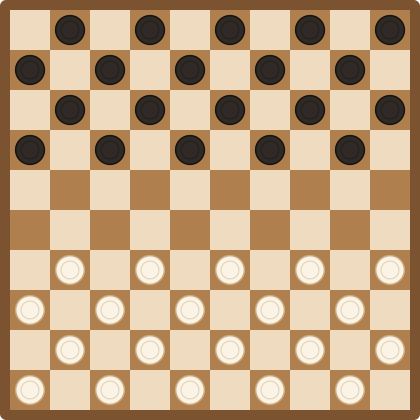
International draughts
Ten by ten, twenty men a side, and the long forced combinations the maximum-capture rule makes possible.
-
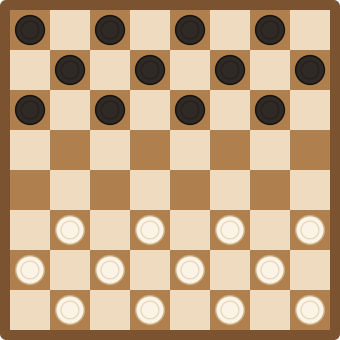
Spanish checkers
Flying kings with forward-only men, and a second capture law that counts kings once the piece counts tie.
-
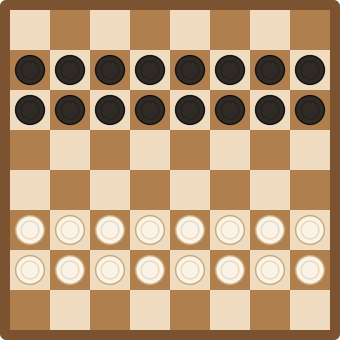
Turkish draughts
Every square in play, sixteen men a side, no diagonals, and captured pieces removed the moment they are taken.
Play any of them
All five are implemented separately in Kondavo, each with its own rating and its own computer opponent.
PlayIt opens in the browser - no download, and no account before the first move.